Are you desperate for that first word? Or wanting to help your toddler broaden their vocabulary? If so, take a read of our communication and language tips courtesy of Sam M at our Devon Nursery, Acorns. Every child is different and the rate of communication and language between children can be significant. If your child is a late bloomer, don’t panic! Speech delay is totally normal, here are some things you can do to help your toddler develop.
Focus on things they like. Children will take more interest in learning words of the things they enjoy. At Devon Nurseries, we focus our activities on the children’s interests. Dinosaurs are always a favourite so we set up dinosaur tuff trays to promote the use of single words such as “stomp” and “roar”. Breaking down words into themed topics can help children understand the meaning of different words.
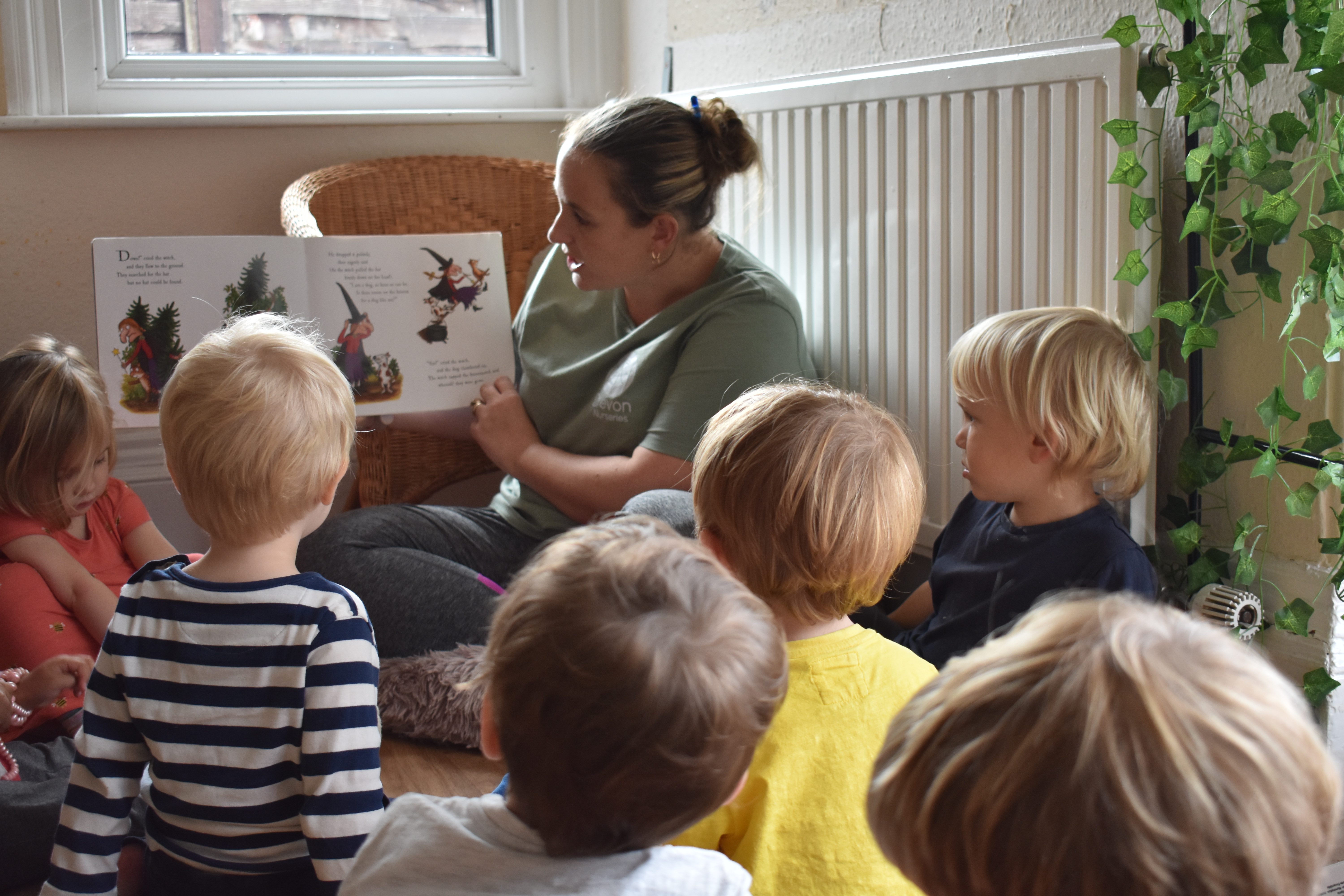
The power of books. Books help develop language significantly. Hearing different words linked to their pictures can help children put the words into context. For example, in our dinosaur tray, we added one of the children’s favourite books about dinosaurs. The book displays the dinosaurs roaring, splashing, stomping and chomping. All the words the staff encouraged the children to say whilst exploring the tray. When children understand the meaning of a word, they will be more inclined to use it.
Use single words in your communication. When children understand the meaning of the word, they will start to use the word! It’s easier for young children to attach understanding to single words rather than full sentences. For example, instead of saying “stop running inside!” say “walk.” This simplifies what you’re trying to say and also uses positive language for what you want them to do rather than negative language for what you don’t want them to do.
Tell children what you’re doing. Children are sponges to new vocabulary and the more you tell them what you’re doing, the more words they will pick up. This gives them the chance to connect the words you’re saying with the actions you’re doing.
Silence can be powerful. Find the right balance between talking to children about what you’re doing and giving them a chance to process, ask questions and tell you what they want and need. For example, instead of just giving them a drink at meal times, let them ask for it! Encourage speech with objects and give them the chance to indicate their wants/needs with single words or even sign language.
Other things to remember
The most important thing to remember is to have patience. All children are different and not everything will work for every child.
Here are some small extra things to remember:
Give them your full time and effort.
Refrain from baby talk and made up words.
Name items.
Expand on their responses.
Use open ended questions and give them time to think and respond.