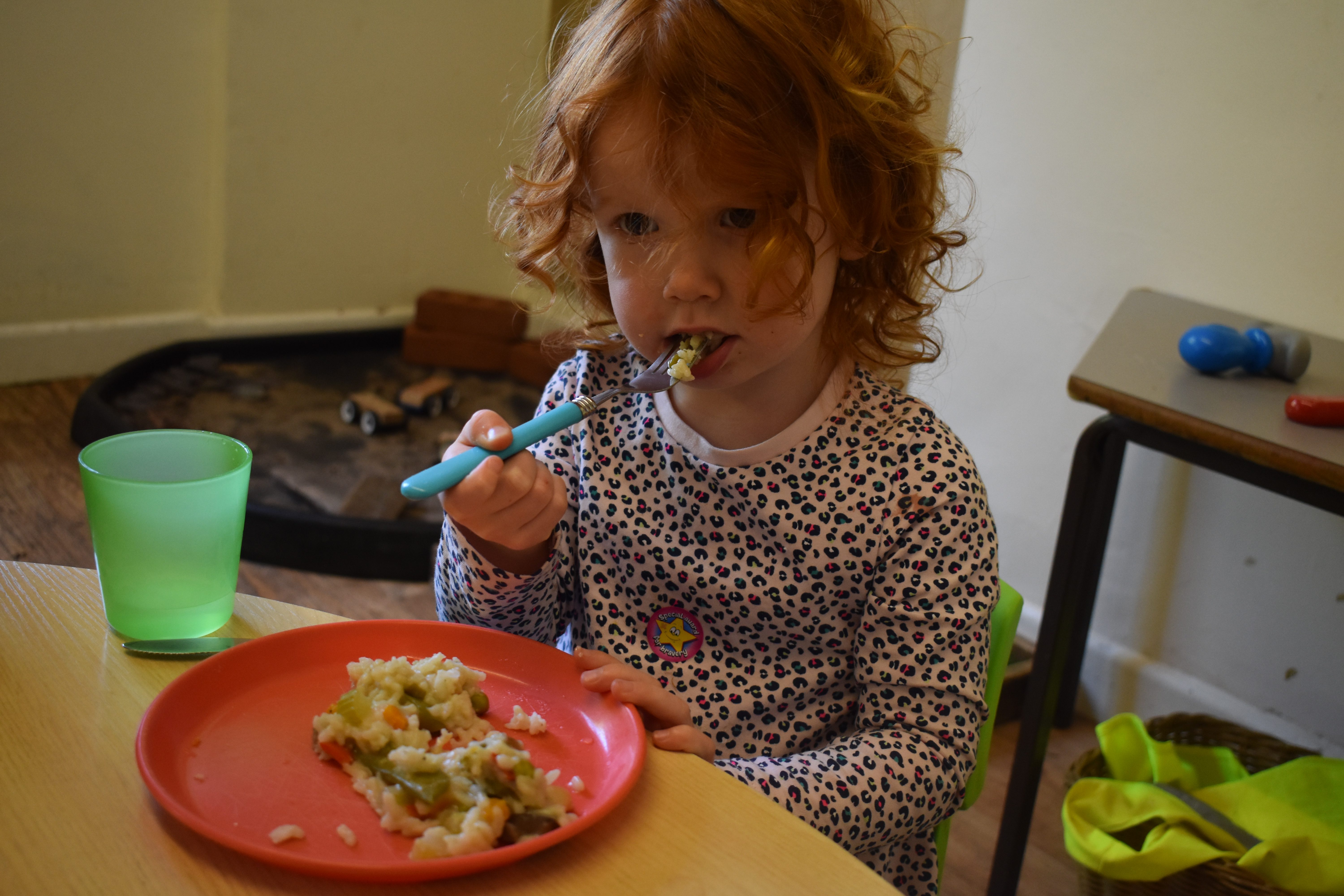
As parents and carers, we want our children to eat nicely at the table! Whether they show enthusiasm for trying new foods or patience waiting at the table for them, meal time behaviour is an important skill to crack. At Devon Nurseries, we’re here to help with table tips.
Early Table Manners
Teaching table manners helps children enjoy their food, interact with the people around them, try new foods and help them to become polite and courteous in later life.
At the nurseries, our children sit down for 3 meals and 2 snacks a day which helps them understand and learn the importance of routine in regard to table manners. Check out some of our meal time rituals.
The children eat at the same time, doing the same meal time routine daily to practise repetition. Try setting a routine at home. Make meal times important and keep it short and achievable.
They eat in a different room or area from where they play. Different locations can be useful in helping children understand when and where they eat. Make use of different spaces and limit distractions.
The staff sit the children at non-restrictive tables and chairs to promote independence and the feeling of “wanting to be at the table.” High chairs can be restrictive for children. Instead of leaving them alone in a high chair, sit with them at a small table and chair. If you don’t have a suitable table or space for one at home, check out this small table and chair set.
Children sit at the table with their peers to encourage social interaction, with an adult at each table so they can be helped if they need it. Life can be busy, but take the time to sit down and eat with your child.
The staff encourage the children to be patient as they take turns to receive their food. Highlight the importance of patience. Ask them to sit down first before serving their food.
For our younger children, the staff will start by feeding the children first. They role model by using the cutlery so the children can attempt themselves after. Try to feed your child first using the cutlery so they know how to and want to attempt themself after. Don’t force them if they start to use their hand after a while, this is expected for a 1-2 year old. As they grow older, introduce cutlery and model using it.
The staff encourage children to try all foods and give positive praise when they do. Positive reinforcement and praise helps children feel encouraged. Use open ended questions such as “What food are you going to try next?” and positive phrases like “Well done for trying.”
We do not force the children to eat all of the food if they do not like it. “You can’t leave the table until you’ve cleared your plate” is an outdated view. If your child tries their food, but doesn’t like it, do not force them to eat it all. This will create a negative relationship with food and mealtimes.
Eating & Trying New Foods
At our Devon Nurseries, our menu is very varied, healthy and exciting! The same food every day might bore your child and disencourage their table manners. Go bold and creative with the choices you give your child, even if you think it’s unsuitable, you could be surprised! We have 2 seasonal menus that include 4 exciting weeks of healthy choices. The meals are unique, represent a range of countries and cultures, and can sometimes be a challenge for the children to try, but this builds confident risk taking and future desires to try new foods. Healthy eating is an important practice here at Devon Nurseries. Take a look at our policy on page 48 for more details. Policy Master Devon Nurseries